Total Pageviews

Thursday, November 15, 2012

Tinkers

The following is the gist of the discussion...

Tinkers--the story of three generations of men--a preacher--a tinker of words; his son a tinker of pots and peddler of wares; and his son--a tinker who puts together a house and clocks is the first published novel of Paul Harding. (Another novel was discarded and this one was pieced together--tinkered--much like a soldered tin pot.) 

Mixed experiences reading this book even for the members who overall liked the novel.  Sections on the workings of clocks were difficult to get through and most skimmed or skipped over them.  The lack of action  and  lack of clarity was bothersome for some as well.  The peddler experiences in nature also were irksome to read for some.  Perhaps these were the very objections that led to rejection after rejection by publishing companies before Bellevue Press printed  it.

What made this book worthwhile?  The poetic language, the characters, the amazingly realistic capturing of the random thoughts of a man on his death bed. The ending--a Rosebud moment--poignantly moving.

But was this book worthy of a Pulitzer Prize?  Probably not was the majority feeling.  This, a first novel, seemed heavily influenced by the writing style of Harding's mentor...Marilynne Robinson  also a Pulitzer Winner.  A Pulitzer should reward a published established writer who has a body of work and a unique style --a unique voice expressed one member and others agreed. 


Thanks to smart phones we were able to hear a list of previous Pulitzer winners many of which we agreed were given to writers who fit our groups' definition.  Browse for yourself...

Pulitzer Prize Winners 

*Still...on reading the cover...it turns out that this books has been named one of the  best books or notable book of the year by NPR, the New Yorker, Granta, ALA, etc. So....

*Added by the sponsor of the book and this blogger....

And this is added by BB who came late to the meeting...

Harding said in an interview that he was reading Karl Barth, the prominent Protestant theologian of the 20th century who wrote, among other topics, on revelation. Whether a believer or not, the fiction writer has a handy tool in revelation--a God's eye view, so to speak. In the final summing-up of George's life, pieces are fitting together in his mind like the works of a clock. Some of those pieces were not actually known to George previously—his grandfather’s dementia and banishment, for instance—but are now revealed to him. (1 Corinthians 13:12: "For now we see in a mirror dimly, but then face to face. Now I know in part; then I shall understand fully, even as I have been fully understood.") Is the reader to believe that as George hovers between this world and eternity, he's seeing God face to face? And is the point of this book that the final stage of life, dying, has value? 

Marilynne Robinson, Harding's mentor, has a big interest in theology, as I think does Harding.




Sunday, October 21, 2012

We the Animals: Discussion

Everyone...and there were quite a number of members present...liked this lyrical novel that poetically captured the upbringing of three boys by two other children--their very young parents.   A sentence/paragraph which goes on for half a page was read aloud.

"Always more, always hungrily scratching for more.  But there were times, quiet moments, when our mother was sleeping, when she hadn’t slept in two days, and any noise, any stair creak, any shut door, any stifled laughter, any voice at all, might wake her, those still, crystal mornings, when we wanted to protect her, this confused goose of a woman, this stumbler, this gusher, with her backaches and headaches and her tired, tired ways, this uprooted Brooklyn creature, this tough talker, always with tears when she told us she loved us, her mixed-up love, her needy love, her warmth, those mornings when sunlight found the cracks in our blinds and laid itself down in crisp strips on our carpet, those quiet mornings when we’d fix ourselves oatmeal and sprawl onto our stomachs with crayons and paper, with glass marbles that we were careful not to rattle, when our  mother was sleeping, when the air was still and light, those mornings when silence was our secret game and our gift and our sole accomplishment—we wanted less: less weight, less work, less noise, less father, less muscles and skin and hair.  We wanted nothing, just this, just this.” * See BB's paragraph in this style describing her childhood, below.


All agreed that it was beautifully done.  But too much agreement may not make a good blog entry. (Sorry for the self-consciousness.)

A few sparks shot up but were not kindled enough to keep the log of conversation rolling--how is that for a mixed metaphor...Not to say people didn't keep talking...they did.  And what they said was certainly articulate.  Oh my, I am digging myself into a hole.

Back to log metaphor...
Here are some sparks:

Spark 1:  The narrator's revelation was not fore-shadowed or developed enough  and seemed abrupt.  This spark created the biggest flame...as a good number of members felt that this was not so.
Spark 2:   This felt like a first novel...(I lost the reasoning behind this comment, sorry.)
Spark 3:   What would the second novel be like?  Can the author write in a different voice?
Spark 4:   Some elements of the novel are autobiographical--we tried to decipher which ones were based on  author's statements.  Don't want to reveal them as they give away some important elements in the novel.

We are all interested in reading more by Justin Torres...Turns out one member's daughter is in a writers' group with him.   Cool!


*Always reading, always devouring more.  And there were times, still times, when my mother was busy in the kitchen, when I knew I wasn’t alone in my solitude, and no noisy brothers, no ringing phone, no burst-open door, no cat yowling outside could distract me, those lavender afternoons when I cocooned in an afghan, myself a pupae, a snuggler, a kangaroo’s joey, with my book and my doll and my old-fashioned ways learned from my mother’s stories and my mother’s books, with their lovable characters, their improbable coincidences, their hair-raising perils and their happy-ever-after endings, those winter afternoons when the sun kissed the horizon radiating pink to violet through the window that looked onto the sun porch, those golden afternoons when I’d lie on the couch between window and fireplace with the book I was inhabiting, when my mother stirred tuna into cooked noodles and sprinkled crushed corn flakes on the other side of the wall, when the air was cool and light, those afternoons when reading was my secret garden and my gift and my proudest achievement—I wanted less: less piano playing, less dishwashing, less dressing up, less acting ladylike, less curlers, combs and barrettes.  I wanted just this—to read. 

by B.B

Saturday, October 13, 2012

Book Selections for 2012 to 2013

We The Animals
Justin Torres
October 17th


Tinkers
Paul Harding
November 14th
Tinkers


Caleb's Crossing
Geraldine Brooks
December 19th


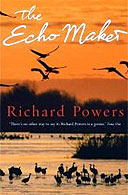
The Echo Maker
Richard Powers
January 16th

The Echo Maker by Richard Powers

In the Garden of the Beasts
Eric Larson
February 27th


Gilgamesh
Translator to Come
March 20th

The Patrick Melrose Novels
Edward St. Aubyn
April 17th

Edward St. Aubyn The Patrick Melrose Novels

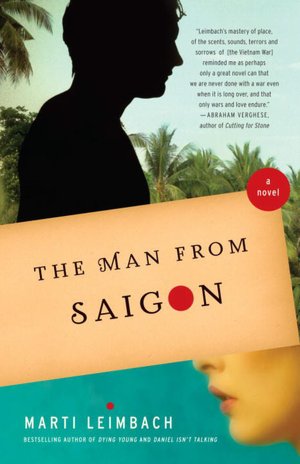
Man From Saigon
Marti Leimbach
May 15th
The Man From Saigon
Sense of an Ending
Julian Barnes
June 19th